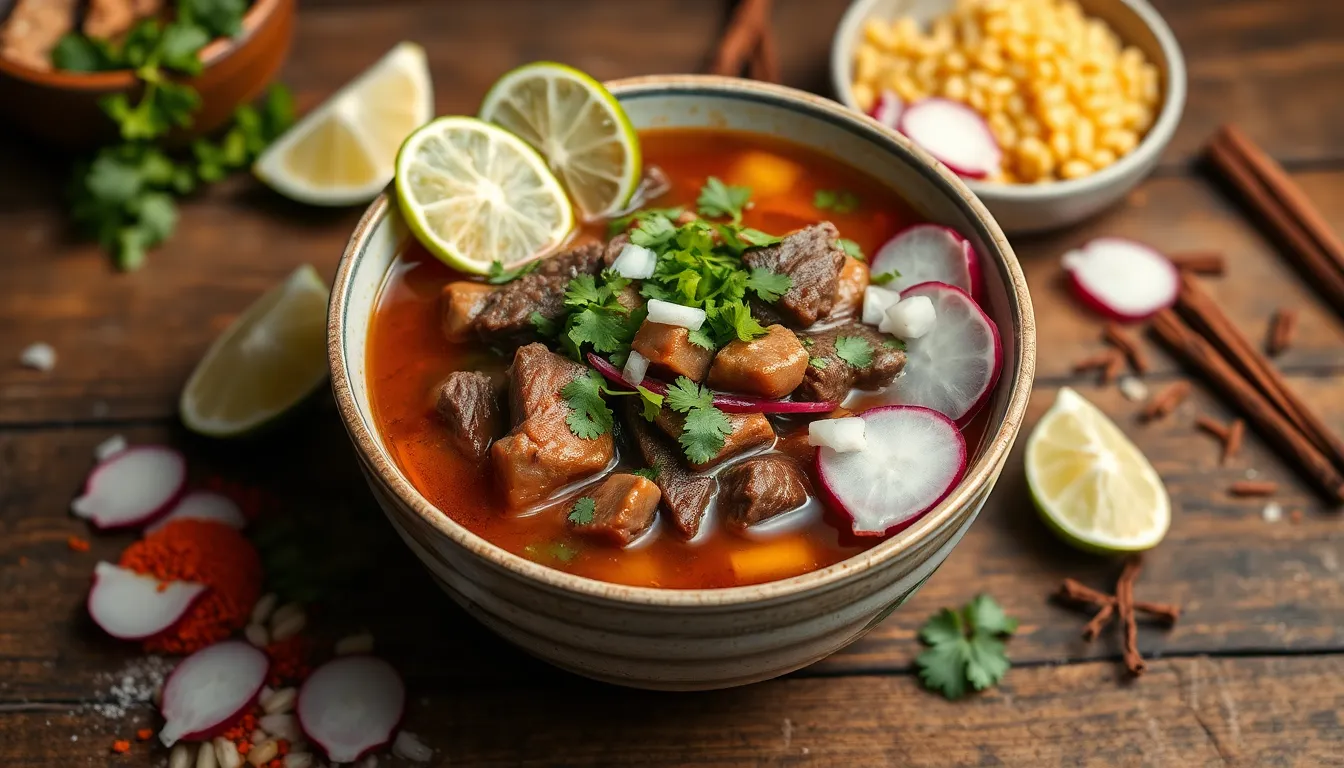
Menudo is a beloved traditional Mexican dish known for its rich flavors and hearty ingredients. Often enjoyed during festive gatherings or as a comforting remedy for hangovers, this dish has captured the hearts of many. But what exactly goes into this iconic soup?
At its core, menudo is made from beef tripe, which gives it a unique texture and flavor. The dish is simmered in a savory broth seasoned with various spices, chilies, and herbs, creating a warm and inviting aroma. Additionally, it often features hominy, which adds a delightful chewiness, making each bowl a satisfying experience. Understanding what menudo is made of opens the door to appreciating its cultural significance and culinary artistry.
What Is Menudo Made Of?
Menudo consists of several key ingredients that create its distinctive flavor and texture.
- Beef tripe: The primary component, providing a chewy and somewhat gelatinous texture. Tripe is the stomach lining of cattle and requires slow cooking to achieve tenderness.
- Hominy: Dried corn kernels that have undergone a process called nixtamalization. This ingredient adds a hearty and chewy element to the dish, enhancing its overall nutritional profile.
- Broth: A savory mixture made from simmering meat and bones, often seasoned with spices, herbs, and aromatic vegetables. Common seasonings include garlic, onions, and bay leaves, contributing depth to the flavor.
- Chilies: Various types can be used, including ancho or guajillo chilies. These provide heat and complexity, balancing the richness of the broth.
- Spices: Oregano, cumin, and black pepper are typically added to enhance the dish’s flavor. Each spice contributes its unique character, making the dish well-rounded.
- Garnishes: Typically served with lime wedges, chopped cilantro, diced onions, and radishes, these garnishes add freshness and additional flavor when served.
Overall, the combination of these ingredients results in a hearty, flavorful dish that holds cultural significance, especially during festive gatherings.
Key Ingredients
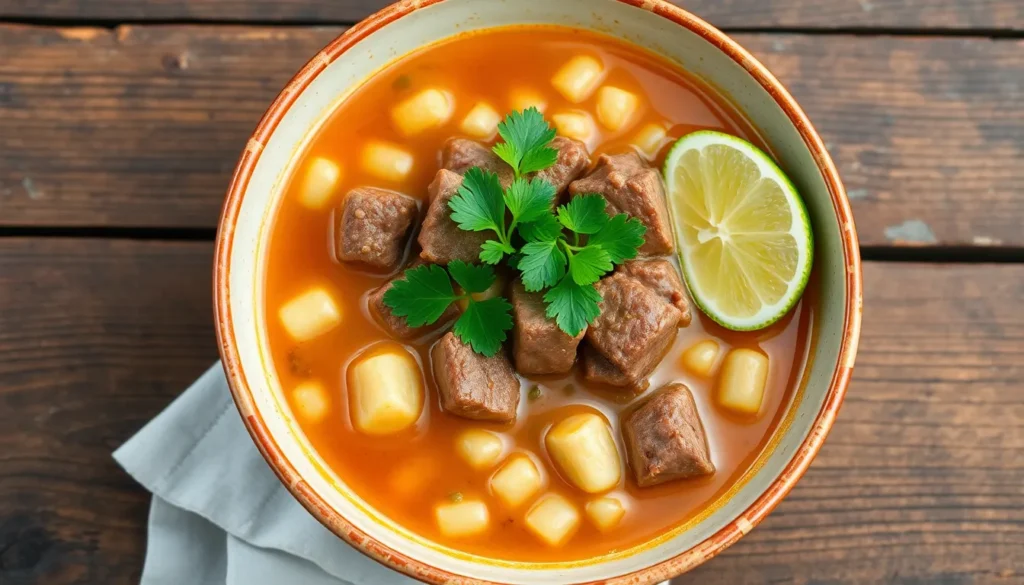
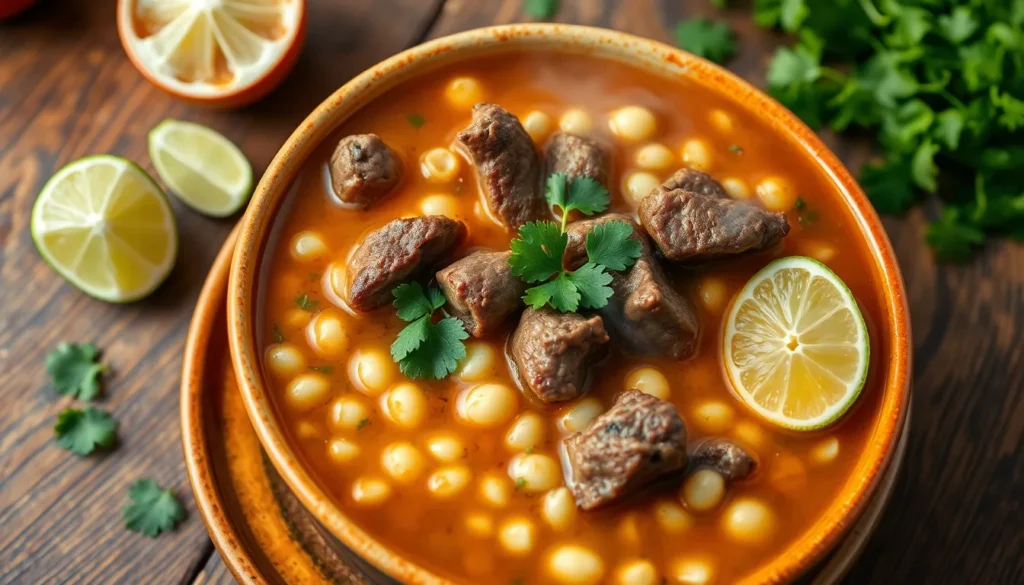
Menudo consists of several key ingredients that contribute to its rich flavor profile and texture. Understanding these components deepens appreciation for the dish’s culinary significance.
Hominy
Hominy, a key ingredient in menudo, consists of dried corn kernels that undergo a chemical process called nixtamalization. This process enhances the kernels’ flavor and nutritional value. Hominy adds a chewy texture and absorbs the savory broth’s flavors, creating a hearty base that balances the dish.
Beef Tripas
Beef tripas, or tripe, serves as the primary protein source in menudo. Tripe, specifically from the stomach lining of cattle, provides a unique, chewy texture that many enjoy. When properly cleaned and cooked, tripas become tender and flavorful, absorbing the spices and broth, crucial for an authentic menudo experience.
Broth
The broth in menudo is essential for bringing together the dish’s components. Made by simmering beef bones and additional meat, the broth becomes rich and savory through hours of cooking. It incorporates seasonings such as garlic, onion, and bay leaves, while various chilies introduce heat and depth. The careful simmering process results in a flavorful liquid that forms the foundation of this traditional dish.
Traditional Variations
Menudo showcases regional adaptations and family recipes throughout Mexico and beyond. These variations reflect local ingredients and cultural influences, enriching the dish’s versatility and appeal.
Regional Differences
Menudo varies by region, with unique twists emerging in different states.
- Menudo Blanco: Found in areas like Mexico City, this version features a lighter broth without red chilies, focusing on fresh herbs and spices.
- Menudo Rojo: This variant, popular in northern Mexico, includes red chilies, giving it a vibrant color and robust flavor.
- Menudo de Res: In certain regions, the dish substitutes other meats like beef or pork, providing alternatives to those who prefer variations.
- Menudo con Garbanzos: Some recipes incorporate chickpeas, adding a different texture and nutritional profile to the dish.
Family Recipes
Family recipes contribute to menudo’s rich tapestry, with each family often including personal touches.
- Herb Additions: Many families use specific herbs like oregano or epazote, enhancing the broth’s fragrance and depth.
- Secret Spices: Some use unique spice blends, such as cumin or coriander, imparting a distinct flavor that distinguishes their menudo.
- Serving Styles: While garnishing menudo with the usual lime, cilantro, and onions, some families include avocado, jalapeños, or cheese for added flavor options.
- Preparation Techniques: Cooking methods vary, with some families opting for pressure cookers to speed up the process while others prefer slow simmering for enhanced flavor development.
Nutritional Value
Menudo offers various nutritional benefits thanks to its rich ingredients. The primary components contribute to a balanced dish, highlighting its role in traditional diets.
Health Benefits
- Protein Content: Menudo provides a substantial source of protein due to the beef tripe and meat used in the broth. Each serving can contain approximately 20-25 grams of protein.
- Vitamins and Minerals: Menudo contains essential vitamins and minerals, including B vitamins, iron, and zinc. These nutrients support energy metabolism and immune function.
- Healthy Fats: The dish contains healthy fats, particularly if made with leaner cuts of meat. These fats assist in nutrient absorption and promote heart health.
- Digestive Health: Hominy, a vital ingredient, offers dietary fiber that aids in digestion. Fiber promotes satiety, potentially helping with weight management.
Considerations
- Caloric Density: Menudo can be calorie-dense. Depending on the recipe and portion size, a serving may contain around 300-500 calories.
- Sodium Levels: Some versions of menudo may be high in sodium, especially if commercial seasonings or broth bases are used. Monitoring sodium intake is crucial for individuals with hypertension.
- Quality of Ingredients: The nutritional profile varies based on ingredient quality. Using high-quality, organic meat and fresh vegetables enhances the dish’s overall nutrition.
- Allergens: Individuals with allergies should consider ingredients carefully. Menudo may not be suitable for those with sensitivities to beef or corn products.